
Provençal village
Vauvenargues
The village where Picasso rests.
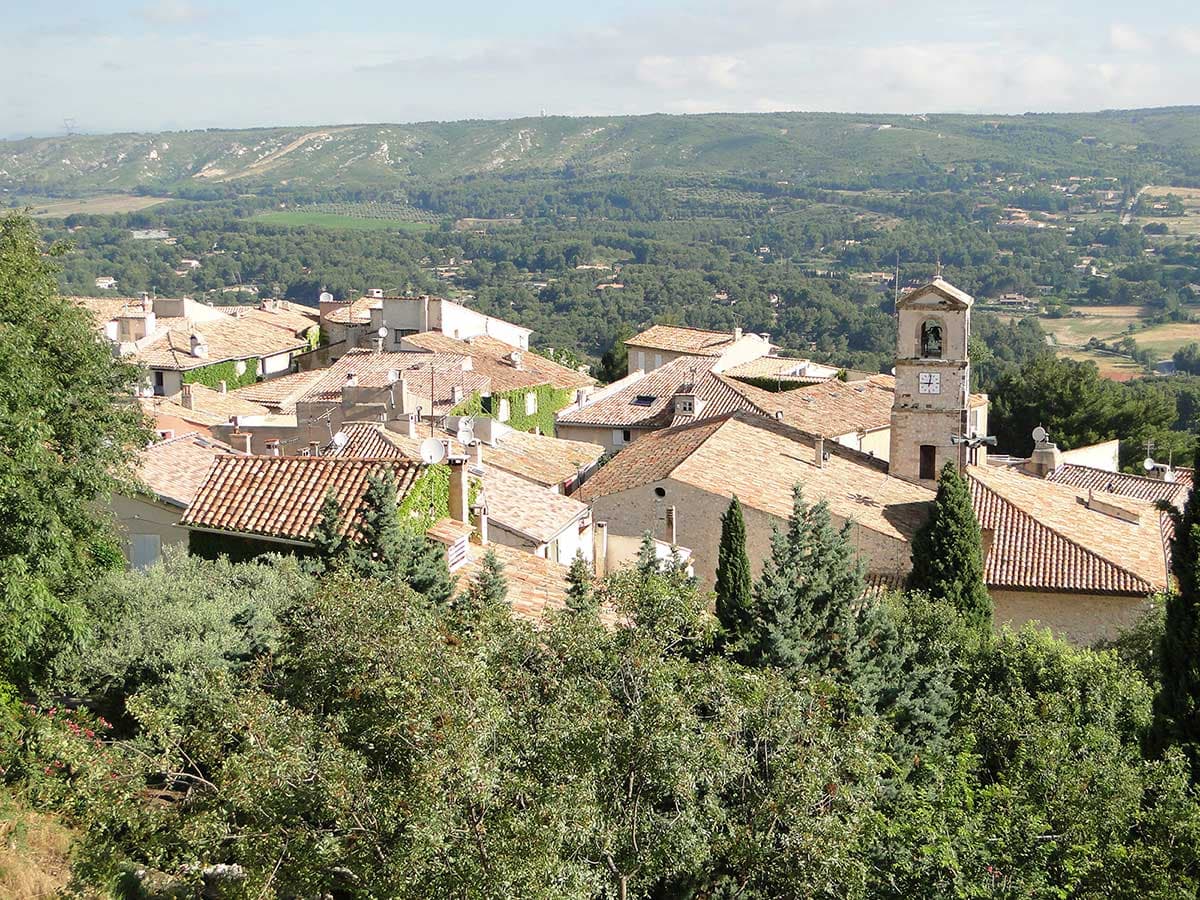
East of Aix-en-Provence, in the hollow of the Infernet valley, Vauvenargues lies at the foot of the northern face of Mont Sainte-Victoire. A peaceful Provençal village, surrounded by pine woods and garrigue, reached by a little mountain road.
Here, the mountain is everywhere — it towers over the rooftops, changes colour as the hours pass, beckons you on long hikes. It is the same Mont Sainte-Victoire that Cézanne painted, seen from the other side.
Vauvenargues bears another famous name: that of Picasso. The painter bought the village château in 1958, lived there for a few years, and chose to rest there for ever, facing the mountain.
Life follows the rhythm of the Provençal seasons — garrigue in flower in spring, the shade of the pines and the song of the cicadas in summer, low golden light in autumn. Vauvenargues is an invitation to silence and to walking, in the heart of Provence.
Picasso’s château
Home and resting place of the master
Mont Sainte-Victoire, north face
Wild, unspoilt hiking
Authentic village
Far from mass tourism
Discover
TO SEE
Le Château de Vauvenargues
Set apart from the village, nestled in greenery, the château raises its round towers and red shutters at the foot of Mont Sainte-Victoire. A stronghold of the Counts of Provence, it was largely rebuilt in the 17th century for the Clapiers family, and is listed as a Historic Monument. In 1958, Pablo Picasso bought it — “I have bought Cézanne’s Sainte-Victoire,” he told his dealer at the time. He lived and painted here, and chose to rest here: the artist is buried in the park, beside Jacqueline. The residence remains private and is not open to visitors; it is admired from the village, its mass of stone watching over the valley.
Mont Sainte-Victoire, north face
Above the village, Mont Sainte-Victoire raises its limestone ridges into the sky. This is its northern face, more secret than the side Cézanne painted from Aix. The rock changes colour throughout the day, from the stark white of midday to the ochres of evening. On the ridgeline, the Croix de Provence can just be made out, set at the very top. Picasso, like Cézanne, drew his light from it; you need only look up to understand why.
Experience
TO DO
Hiking to the Croix de Provence
Vauvenargues is one of the starting points for climbing Mont Sainte-Victoire. The trails rise through garrigue and pine forest up to the ridges. Up there, the priory and the Croix de Provence overlook the whole region, from the Alpilles to the Luberon. The climb is demanding, but the reward is worth the effort. Please note: in summer, access to the massif may be restricted or closed because of the fire risk — check before setting off.
Walking around the Lac de Bimont
A few minutes away, the Lac de Bimont stretches out at the foot of Mont Sainte-Victoire. An easy trail circles the lake, in the shade of the pines. The turquoise water contrasts with the white cliffs and the green of the forest. It is a walk for everyone, ideal with family or at the end of the day. From the dam, the view of the mountain is superb.
Wandering through the village
Far from the bustle, Vauvenargues keeps the calm of a true mountain village. You stroll between stone lanes and shaded squares, up to the 16th-century church. On Friday mornings, a small market livens up the heart of the village. A terrace, a drink in the shade, and time slows down. This is discreet Provence, to be lived rather than visited.