
Provençal village
Ventabren
The medieval village with cobbled lanes.
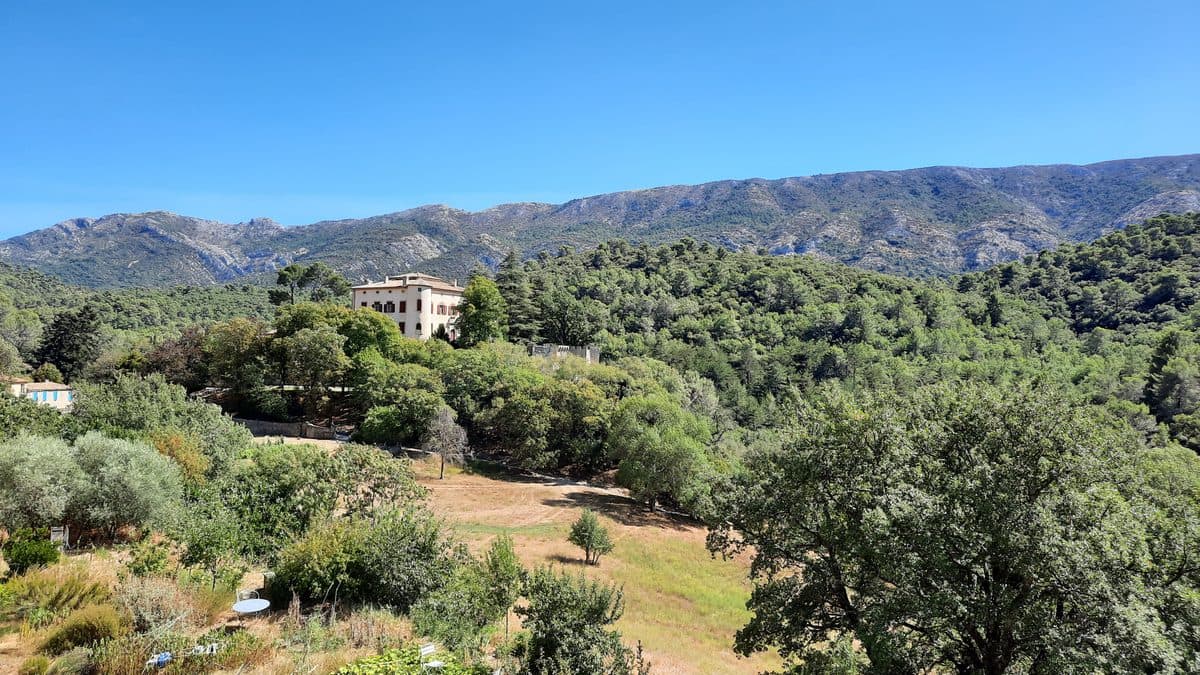
West of Aix-en-Provence, Ventabren rises like a balcony above the Provençal countryside. Perched at two hundred and fifty metres and listed for its setting, the village unfurls its stone lanes between Mont Sainte-Victoire and the Étang de Berre.
At the top, the ruins of the château de la Reine Jeanne crown the hill. You climb up to them for the immense panorama, which takes in the plain, the surrounding ranges and the waters of the lagoon.
Yet Ventabren hides a giant. Below, in the Arc valley, the Roquefavour aqueduct spans the river with its monumental arches — the largest stone aqueduct in the world, built in the 19th century to quench Marseille’s thirst.
Life follows the rhythm of the Provençal seasons — garrigue in flower in spring, sun-warmed stone and the song of the cicadas in summer, golden light in autumn. Ventabren invites you to rise above it all, with the whole of Provence before you.
Medieval château
The Reine Jeanne ruins and their panorama
Aqueduc de Roquefavour
The largest stone aqueduct in the world
Picturesque village
Flower-filled lanes and art galleries
Discover
TO SEE
The ruins of the château de la Reine Jeanne
At the top of the village, the remains of a medieval castle crown the hill. A short path leads up to them from the last of the lanes. From the foot of the ruins, the panorama opens wide: the Étang de Berre like a lake set in the plain, the Étoile range, the lower Arc valley. On a clear day, the view reaches Mont Sainte-Victoire, and further still towards Mont Ventoux. Only stones remain, but the view has not changed.
L’Aqueduc de Roquefavour
Below the village, in the Arc valley, the Roquefavour aqueduct bars the horizon with its arches. It was built between 1842 and 1847 by the young engineer Franz Mayor de Montricher, to carry the Canal de Marseille across the Arc. Its mission: to bring water from the Durance to Marseille, then parched by droughts. Nearly four hundred metres long, some eighty metres high and built on three tiers of arcades, it is the largest stone aqueduct in the world. It has been listed as a Historic Monument since 2002.
Experience
TO DO
Strolling through the old village
The heart of Ventabren is climbed on foot, along cobbled lanes and stone stairways. The old houses huddle together, with pastel shutters and weathered doors, up to the Place de l’Église. The 17th-century church of Saint-Denis watches over the heights. Fountains and wash houses mark the way up, relics of a village turned towards water. At every turn, a gap opens onto the plain.
Hiking to Roquefavour
A trail links the old village to the aqueduct, through garrigue and hills. Along the way, you follow the Canal de Marseille and cross an ancient Celto-Ligurian oppidum, the Camp de Marius. The route ends with a plunging view of Roquefavour, breathtaking from the plateau. Allow half a day, with walking shoes on. It is the finest way to approach the structure: by the paths rather than the road.
Dining at Dan B.
In the heart of the village, Dan B. occupies one of Ventabren’s finest addresses. Chef Dan Bessoudo has been here since 2004, and his cooking has earned a Michelin star. Wide bay windows open onto the plain and the Étang de Berre, all the way to the horizon. Creative and precise, the dishes showcase the produce of the region. An experience to book ahead, for lunch facing the landscape or dinner at sunset.